Singing for the Peace of the World – Original Oil Painting by Nam Hoang
Singing for the Peace of the World — Original oil painting
An Original Peace Painting Inspired by Hope and Harmony
This original peace painting expresses a universal longing for harmony, compassion and shared humanity. Singing for the Peace of the World reflects a quiet yet powerful message of unity, where art becomes a voice calling for understanding beyond borders.
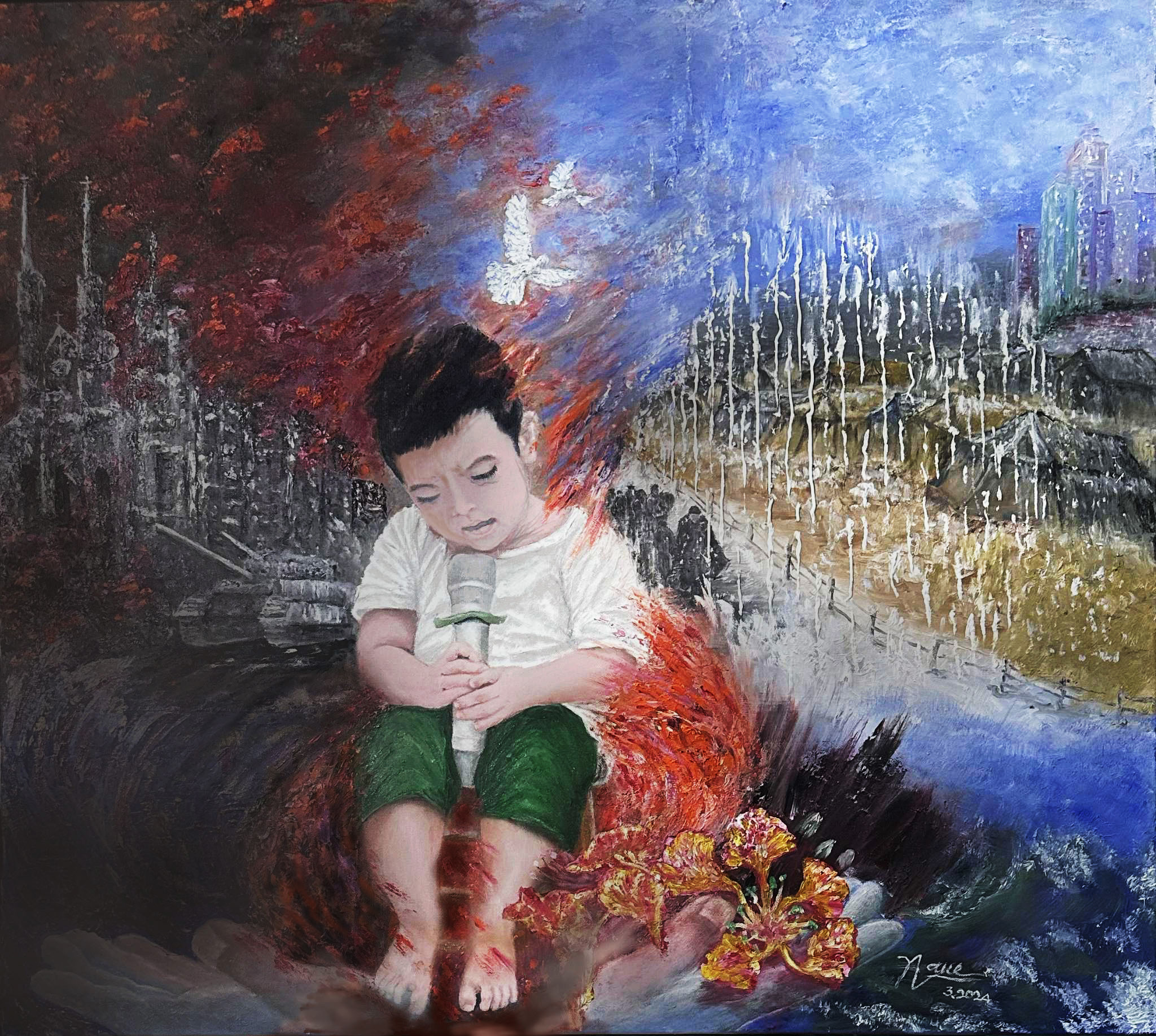
1. Introduction There are moments when grown-ups run out of words, but a child’s voice can still ask for something simple: peace. “Singing for the Peace of the World” captures that fragile, powerful moment. A small child sits quietly with a microphone in hand, surrounded by a storm of color and memory – smoke, ruins, broken landscapes – and yet a white dove rises above, carrying a different possibility. This painting is both a prayer and a question: What kind of world are we building for our children?
2. Story & emotion of the painting On the left side, the world is burning. Shadowy buildings, tanks and dark red tones suggest cities caught in conflict. Everything feels heavy, crowded and hard to breathe. On the right side, the mood shifts. Muted fields, distant buildings and vertical drips of paint feel like rain washing over the land – not fully healed, but slowly being cleaned. It is a world that might become better, if we let it. In the center sits the child – small, barefoot, dressed simply, holding a microphone with both hands. Eyes closed, head slightly bowed, the child looks as if he is singing, praying, or just wishing with their whole heart. Behind the child, warm reds blend into soft violets and blues, forming a kind of invisible stage or halo. Rising from that glow, a white dove spreads its wings – the classic symbol of peace, but here it feels like it is born directly from the child’s song. This painting is not about one specific war or one specific country. It is about every child who has ever lived between fear and hope – and about the quiet power of their voices. 3. Symbolism & meaning The child with the microphone – the youngest, softest voice asking adults to listen; a symbol of innocence and of future generations. Ruins, tanks and dark reds – the reality of conflict, destruction and trauma that children do not choose but must live through. Dripping lines and washed-out fields – tears, rain, and time slowly trying to heal what has been damaged. The white dove – peace, forgiveness and the possibility of a different path. Hands and flowers at the bottom – protection and tenderness, showing that someone still wants to hold and care for the child, even in the middle of chaos. 4. Artwork details Title: Singing for the Peace of the World Artist: Nam Hoang Medium: Oil on canvas Original: One-of-a-kind hand-painted artwork Size: 90 cm ×80 cm Orientation: Landscape Year of creation: 2024 Style: Symbolic realism, contemporary figurative art Theme: Peace, children, anti-war, hope, human resilience Suggested placement This work carries a strong emotional message and fits best in: Living rooms or studios where art is meant to start conversations Offices or creative spaces focused on education, social work or global issues Galleries, NGOs, schools or cultural centers that speak about peace and human rights This original oil painting explores rural landscape themes that are also studied and preserved by leading international art institutions such as The Museum of Modern Art (https://www.moma.org) and Tate Modern (https://www.tate.org.uk). As an original peace painting, the artwork invites reflection on unity and hope beyond borders
3. Vietnamese version – introduction & story
Giới thiệu Có những lúc người lớn không còn biết nói gì, nhưng giọng hát nhỏ của một đứa trẻ vẫn có thể xin một điều rất đơn giản: hòa bình. “Hát Cho Hòa Bình Thế Giới” ghi lại khoảnh khắc mong manh nhưng đầy sức mạnh đó. Một em bé ngồi lặng, hai tay ôm chiếc micro, xung quanh là màu sắc hỗn loạn của khói lửa, đổ nát, đất đai bị tàn phá – nhưng phía trên em, một cánh chim bồ câu trắng vẫn bay lên, mang theo một khả năng khác. Bức tranh vừa là một lời cầu nguyện, vừa là một câu hỏi: Chúng ta đang xây dựng thế giới nào cho con trẻ?
Câu chuyện & cảm xúc Ở phía bên trái, thế giới đang bốc cháy. Những tòa nhà đổ nát, xe tăng và gam màu đỏ thẫm gợi ra cảnh chiến tranh, khói lửa, nơi con người sống trong sợ hãi và mất mát. Ở phía bên phải, bầu không khí dần thay đổi. Những vệt màu nhạt, những đường sơn chảy xuống như cơn mưa, những đường chân trời xa xa – tất cả gợi ra một vùng đất đang được thanh tẩy. Chưa bình yên hoàn toàn, nhưng đã có hy vọng hồi sinh. Chính giữa bức tranh, em bé ngồi nhỏ bé, chân trần, ôm chiếc micro bằng cả hai tay. Đôi mắt khép lại, đầu hơi cúi xuống – như đang hát, đang cầu nguyện, hoặc chỉ đang ước một điều bằng tất cả trái tim mình. Sau lưng em, mảng màu đỏ cam ấm dần chuyển sang tím và xanh, tạo thành một “sân khấu” vô hình hay một quầng sáng bao quanh. Từ đó, cánh chim bồ câu trắng bay lên – biểu tượng hòa bình, nhưng ở đây như được sinh ra từ chính giọng hát của đứa trẻ. Bức tranh không nói về một cuộc chiến cụ thể, mà là về mọi đứa trẻ phải lớn lên giữa sợ hãi và hy vọng – và về sức mạnh yên lặng trong lời hát của chúng.
Biểu tượng & ý nghĩa Đứa trẻ và chiếc micro – tiếng nói của thế hệ tương lai, trong trẻo nhưng đầy khẩn thiết, nhắc người lớn phải lắng nghe. Đổ nát, xe tăng, gam màu đỏ đậm – hiện thực tàn khốc của chiến tranh và bạo lực mà trẻ em không bao giờ tự lựa chọn. Những vệt sơn chảy, cánh đồng nhòe mờ – nước mắt, mưa và thời gian đang cố gắng gột rửa những tổn thương. Chim bồ câu trắng – sự tha thứ, lòng nhân ái và niềm tin rằng hòa bình vẫn có thể đến. Bàn tay, hoa ở phía dưới – vòng tay bảo bọc, mong muốn ôm ấp và chữa lành cho thế hệ nhỏ bé.